
A Step-by-Step Guide to Pregnancy and Childbirth
If you are at the beginning of your pregnancy or trying to understand what happens at each stage, this guide brings together the most important information you need, from the first weeks through to preparing for childbirth: how pregnancy weeks are tracked, your baby’s development, essential checkup appointments, and important tests.
The goal is simple: to help you understand where you are now, what is happening with your baby, and what comes next without having to search through dozens of different pages.
How Is Pregnancy Calculated and Where Are You Now?
Pregnancy is medically measured in weeks and days and usually begins from the first day of your last menstrual period. The average pregnancy lasts around 40 weeks, or 280 days, but the estimated due date remains an estimate rather than a guaranteed delivery date.
If you are saying I am pregnant and want to know your current week, month, and expected due date, use the main pregnancy calculator. It helps you determine your pregnancy dates and your current position on the pregnancy timeline, while this guide explains what happens during the stage you have reached.
The Three Stages of Pregnancy and Baby Development
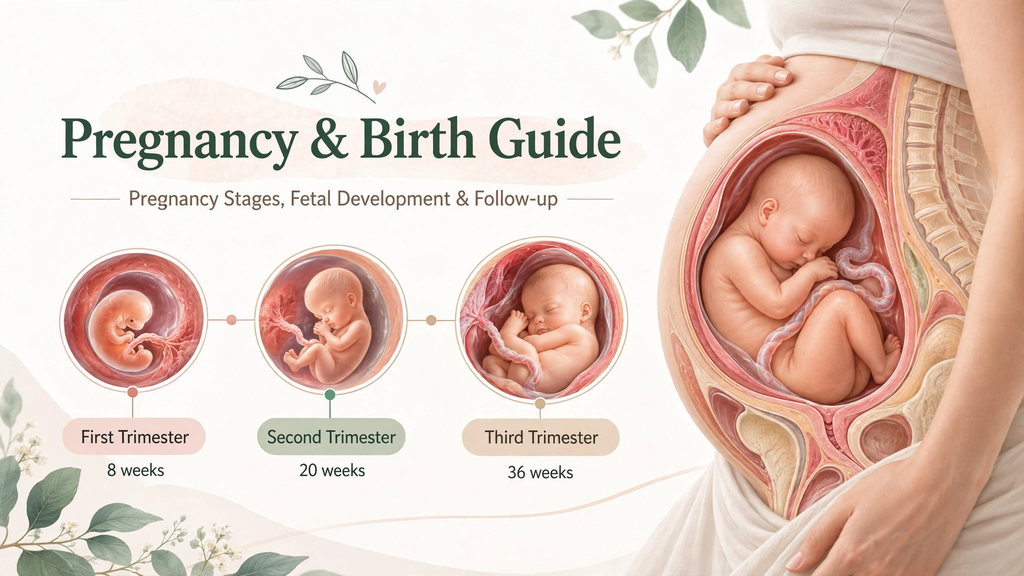
Pregnancy is medically divided into three trimesters. According to ACOG, the first trimester lasts until 13 weeks and 6 days, the second trimester runs from week 14 until 27 weeks and 6 days, and the third trimester begins at week 28.
To follow your journey week by week, try our pregnancy calendar.
First Trimester: The Beginning and Organ Formation
During the first months, the basic structures of the brain, spine, heart, limbs, and other organs begin to form. A woman may also experience changes such as nausea, tiredness, and breast tenderness, although symptoms vary from one person to another.
If you are newly pregnant, this is also the right stage to begin prenatal care early. The Saudi Ministry of Health recommends having the first appointment after confirming pregnancy and before completing 12 weeks. This appointment may include reviewing your medical history, performing a clinical examination, identifying your care needs, and carrying out appropriate tests.
Second Trimester: Faster Growth and More Noticeable Movement
The second trimester runs from week 14 until approximately the end of week 27. Fetal growth becomes faster, the body and organs become more developed, and the baby’s movements usually become more noticeable as this stage progresses.
Under the Saudi Ministry of Health program, an important ultrasound examination is performed between weeks 18 and 22 to assess growth and anatomy. Weight, blood pressure, urine tests, and other necessary follow-up checks also continue.
Third Trimester: Growth and Preparation for Birth
The third trimester begins at week 28. The baby continues to gain weight, while the lungs, nervous system, and other organs continue maturing. As delivery approaches, the baby may move into a head-down position.
During this stage, appointments focus more on the baby’s movements, growth and position, the mother’s health, and practical preparation for childbirth.
Weeks and Months: How Can I Understand My Stage?
Doctors use weeks and days because they are more accurate than months. For simplicity, the following approximate breakdown can be used:
| Month | Approximate Weeks |
|---|---|
| First | 1–4 |
| Second | 5–8 |
| Third | 9–13 |
| Fourth | 14–17 |
| Fifth | 18–22 |
| Sixth | 23–27 |
| Seventh | 28–31 |
| Eighth | 32–35 |
| Ninth | 36–40 |
This breakdown is not a strict medical definition. When following your appointments or ultrasound results, rely on your pregnancy week and day rather than the name of the month.
How Does the Baby Develop During Different Stages?
During the first trimester, the basic organs and body structures form rapidly. During the second trimester, growth continues and movements become stronger and easier to notice. During the third trimester, the baby gains weight and the organs continue to mature in preparation for life after birth.
If you first want to know your current pregnancy week, use the pregnancy calculator and then return to this guide to understand the expected development. However, your baby’s individual weight and size are medically assessed through examinations and ultrasound when needed rather than by relying on a general figure found online.
Pregnancy Checkup Schedule and Important Tests
There is no single care plan that suits everyone because some pregnancies require additional appointments or tests. However, the Saudi Ministry of Health provides eight scheduled essential appointments for low-risk pregnancies, with additional visits arranged when necessary.
| Stage | What Follow-up Includes |
|---|---|
| Before 12 weeks | Medical history, clinical examination, basic lab tests, and setting the follow-up plan |
| Around 18 weeks | Blood pressure and weight, mother and baby checkup, and ultrasound between 18–22 weeks |
| Around 24 weeks | Continuing checkups and glucose tolerance test under the Saudi program |
| Around 28 weeks | Monitoring mother and baby health and handling needs such as Rh when applicable |
| 32 weeks | Monitoring movement, growth, and baby’s position |
| 36 weeks | Focus on baby’s position, labor signs, and preparing for delivery |
| 38 and 40 weeks | Hospital follow-up in preparation for delivery in the low-risk program |
Use this table as a general roadmap for pregnancy follow-up, not as a substitute for the plan set by your healthcare provider based on your condition.
If you are carrying twins, follow-up is more frequent. See our twin pregnancy guide.
What Tests Are Performed in Early Pregnancy?
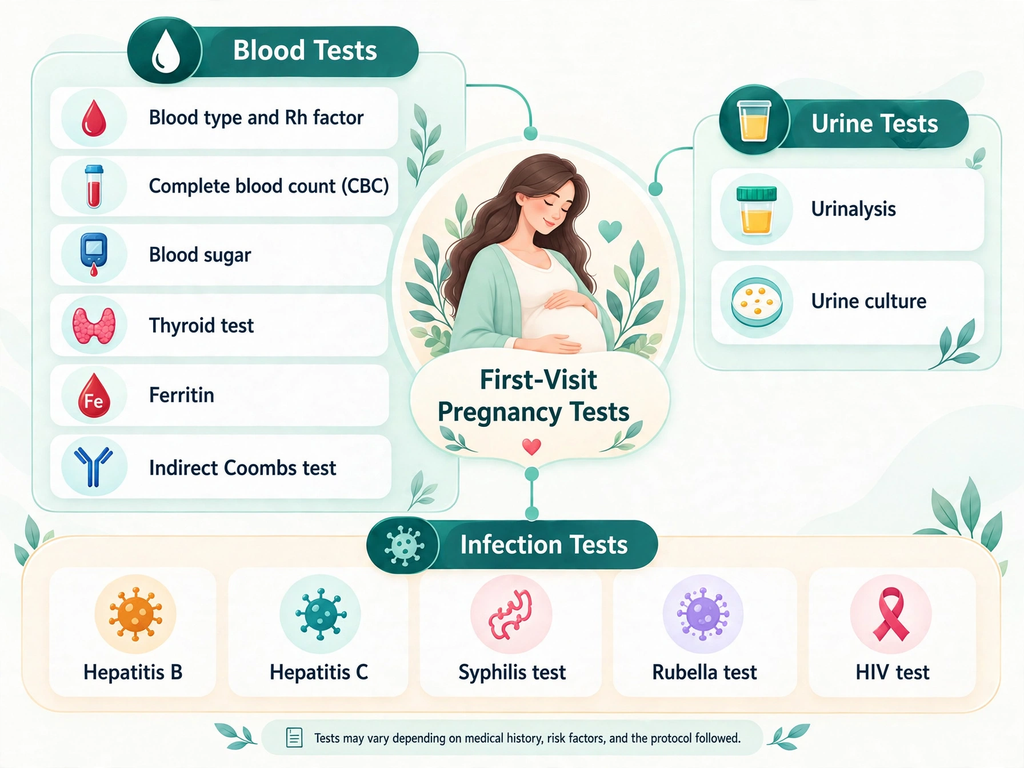
At the first appointment, the Saudi Ministry of Health lists tests that may include blood group and Rh factor, a complete blood count, urine analysis and culture, blood sugar assessment, thyroid testing, hepatitis B and C screening, syphilis testing, rubella testing, HIV testing, an indirect Coombs test, and ferritin testing.
The actual tests required may vary depending on medical history, risk factors, and the healthcare protocol being followed. This means that not every woman will necessarily need every test in exactly the same way.
Daily Care: What Is Worth Focusing On?
Good pregnancy care does not require a long list of complicated rules. Focus on a balanced diet, adequate fluids, physical activity that is suitable for your condition, sufficient sleep and rest, and any supplements recommended by your healthcare provider.
The Saudi Food and Drug Authority also provides a dedicated nutrition guide for pregnant and breastfeeding women, making official sources more reliable than random food lists found online.
Do not stop any prescribed medication or begin a new medicine or supplement based only on online advice without consulting your healthcare provider.
The Final Weeks and Preparing for Childbirth
As the end of pregnancy approaches, recognising important signs becomes more useful than trying to predict the exact day of delivery.
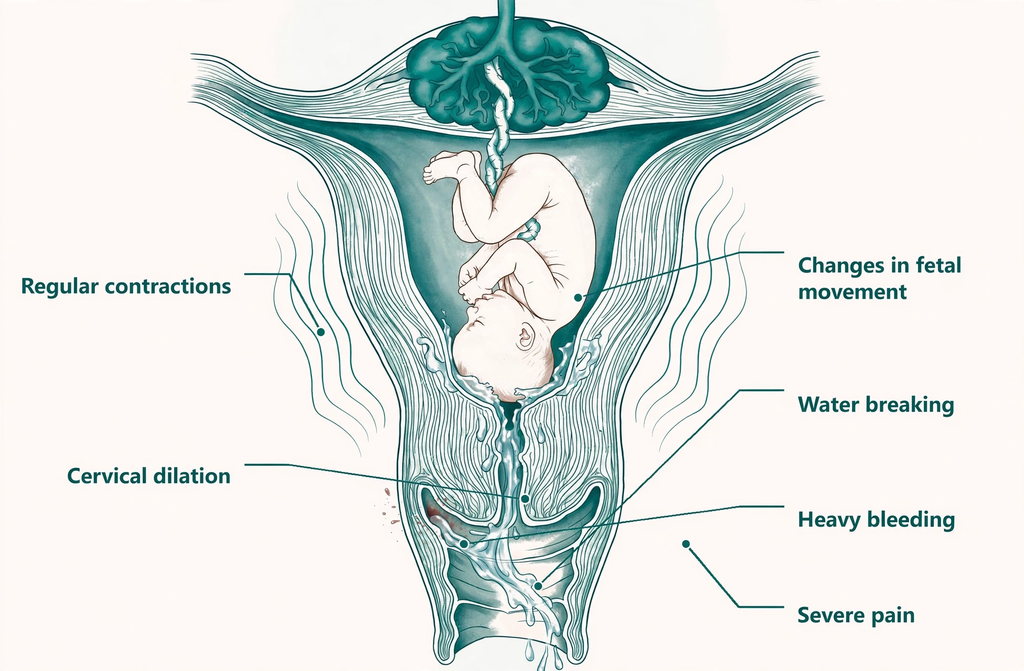
Labor may begin with regular contractions that gradually become stronger and closer together, and the waters may also break. There is no way to predict the exact day labor will begin in advance.
If you experience noticeable bleeding, leaking fluid that may be amniotic fluid, severe pain, or a significant change in your baby’s movements after a usual movement pattern has been established, follow your healthcare team’s instructions and seek appropriate medical assessment.
When Do You Need Urgent Medical Care?
Do not wait for the result of a calculator or an online article if you experience concerning symptoms.
Seek medical care if you experience heavy bleeding, severe or persistent pain, fainting or severe dizziness, or any warning sign that your healthcare provider has previously told you to monitor urgently.
Medical instructions specific to your condition should always take priority over the general information provided in this guide.
Quick Questions
This depends on your established estimated due date. You can calculate the difference between today’s date and your expected due date, but the due date itself is only an estimate. For a direct result, use the main pregnancy calculator.
There is no strict universal definition for the beginning of the ninth month because pregnancy care is based on weeks. In commonly used approximate charts, the ninth month begins around week 36, but pregnancy week and day remain the more accurate way to track pregnancy.
These may include blood group and Rh factor testing, a complete blood count, urine tests, and certain infection, blood sugar, thyroid, and other tests depending on the healthcare protocol and medical history. Your healthcare provider will determine which tests are appropriate for your individual situation.
Choose up-to-date resources written or reviewed by trusted medical organisations. One English-language option is ACOG’s Your Pregnancy and Childbirth: Month to Month. The Saudi Ministry of Health also provides educational materials about pregnancy and childbirth, while the Saudi Food and Drug Authority provides an official nutrition guide for pregnant and breastfeeding women.
Follow the Stage You Are Currently In
The best way to understand a normal pregnancy is not to memorise dozens of dates, but to know your current pregnancy week, understand your baby’s development, and follow the care plan that is appropriate for you.
Use the pregnancy calculator to find your current week and estimated due date, then use this guide to understand your stage and prepare for what comes next.
Medical Disclaimer: This content is provided for educational and general informational purposes only and does not replace medical follow-up, diagnosis, or treatment from a qualified healthcare professional.
For more from a trusted medical source, see the WHO recommendations on antenatal care for a positive pregnancy experience.
Calculate Your Pregnancy Age
Use the pregnancy calculator to find out your week of pregnancy and your estimated due date.